From Face to Scalp to Body — Skinification Is Ingredient Science Proving Itself in the Sales Data
Scalp care grew 19% year-over-year, hair serums 40%. Skinification stopped circulating as a trend-deck term and started showing up in the sales data.
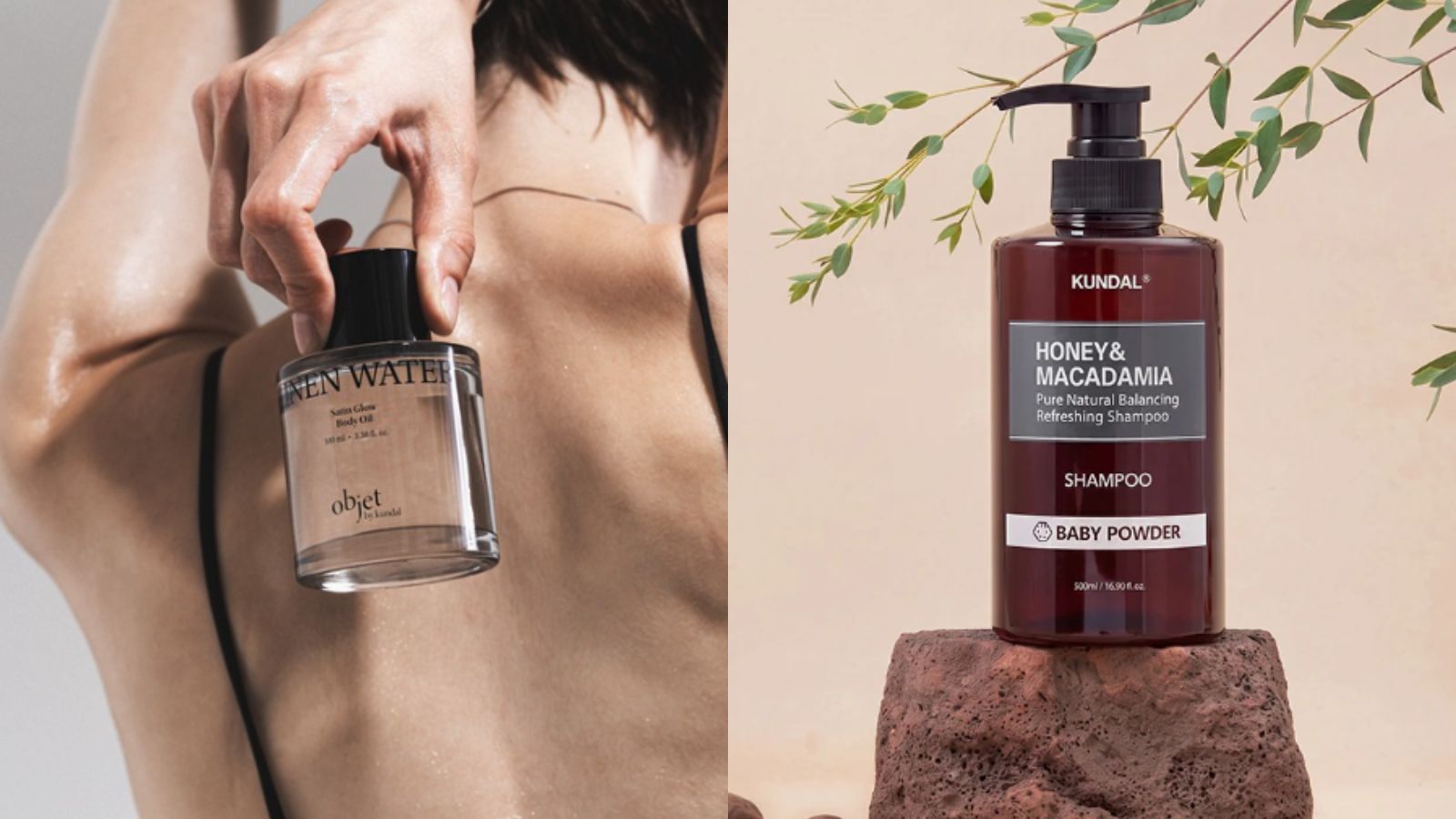
Skinification — applying face-skincare ingredients and logic to scalp, hair, and body — has circulated as a trend-deck term for a few years now. Appearing in a trend deck doesn't guarantee it shows up in revenue. What makes 2026 different is that this one has moved out of marketing copy and into hard sales data. Once a trend turns into a number, the strategy changes with it.
The numbers prove it
Scalp care grew 19% year-over-year in the first half of 2025, per Circana. In the European prestige market, hair serums grew 40%, hair masks 32%, treatments 20%, leave-in scalp treatments 19%, hair oils 17%. Body care shows the same pattern — European prestige body serums jumped 42% in the same period, body oils grew 12%, and Euromonitor projects 6.4% global growth for body care in 2026, in a category already worth roughly $22.3 billion. Growth in the 30–40% range is rare in an otherwise maturing skincare category.
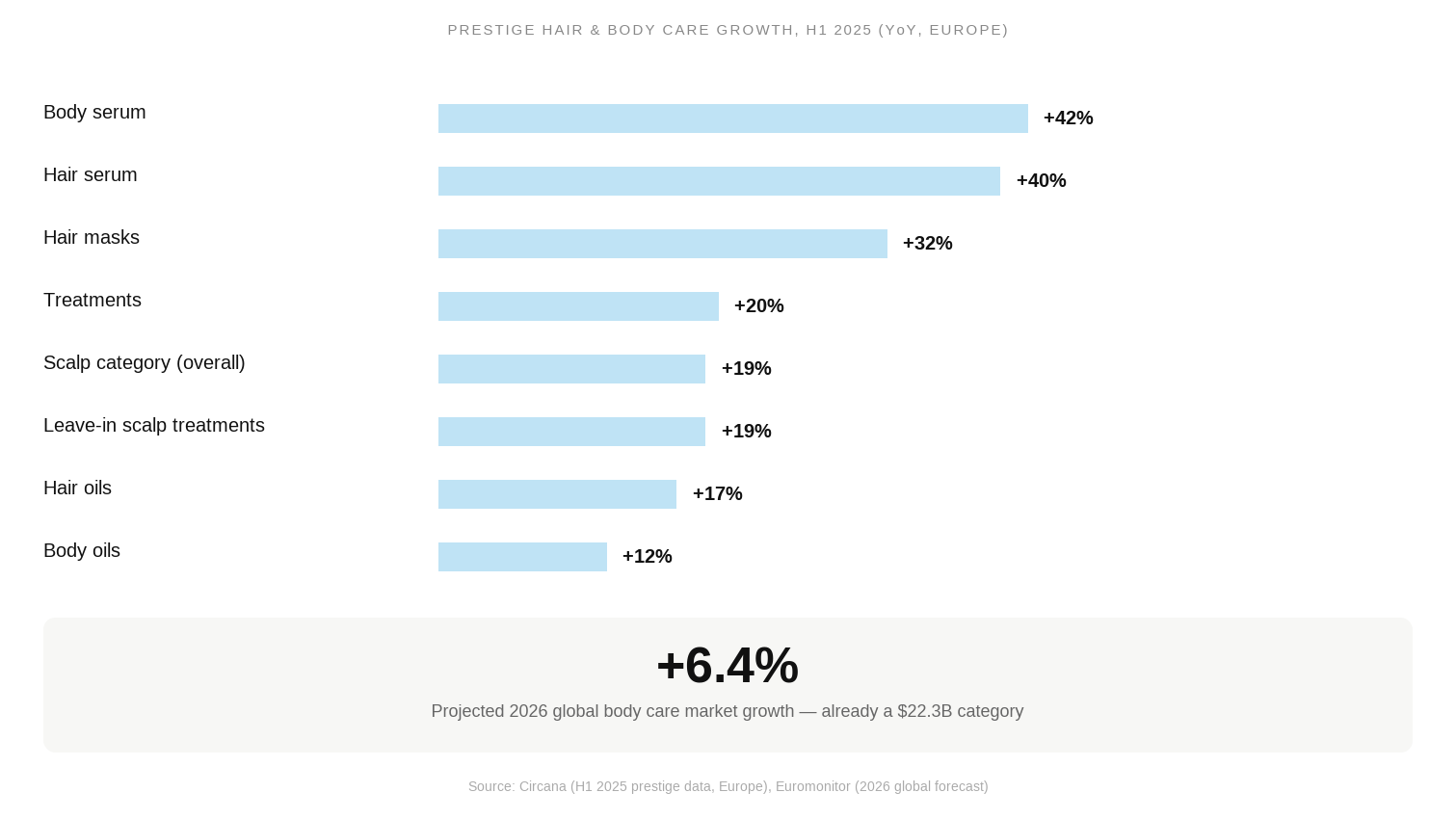
Numbers like these aren't explained by "consumers like novelty." What's actually happening is a transfer of trust: consumers now expect ingredients they've already trusted on their face — retinol, glycolic acid, salicylic acid, ceramides — to work on scalp and body too. The data now makes the case for K-beauty brands to extend the ingredient trust built in face skincare into hair and body lines.
Prestige to mass — 2026 is the inflection point
Modern Retail projects skinification hitting mass retail aisles in earnest this year. Until now it's largely been prestige- and indie-led; expect retinol body creams and glycolic/salicylic-based hair and body products on big-box and drugstore shelves too. Naturium, Necessaries, and Paula's Choice are already bringing retinol body creams to the mass market.
The prestige-to-mass shift is both an opportunity and a threat for K-beauty. The opportunity is a bigger market. The threat is that "being first" dilutes fast once mass brands copy it. Surviving that phase isn't about competing on price — it's about locking in trust in how the ingredient works before it gets replicated.
The next contest is mechanism, not ingredient lists
In skinification's early phase, simply porting a face ingredient to scalp or body was newsworthy on its own. Now that the market has gone mass and lookalikes are everywhere, both consumers and buyers want concrete evidence of why and how an ingredient works on that specific zone. "Contains hyaluronic acid" and clinical data that accounts for skin-barrier differences across body zones build fundamentally different levels of trust.
At the product-development and buyer-pitch stage, that means replacing ingredient-name lists with material that connects a zone's structural characteristics to the ingredient's mechanism — clinical data, human-use trial results — which doubles as a logical basis for a buyer's shelf-placement decision.
It's hard to dismiss skinification as a passing fad when the sales data backing it is this clear. The real contest in 2026 isn't who caught the trend first — it's who stays the most credible proof-point for how an ingredient works as the trend moves mass. Extending face-skincare trust into scalp and body is an opportunity. The moment that trust moves without the science behind it, the brand looks like everyone else riding the same wave.
- Expect skinification to hit mass retail aisles in 2026 — Modern Retail
- The Skinification of Beauty: How Skincare is Transforming Everything — Circana
- Skinification's Next Frontier: Expanding Healthspan — BeautyMatter
- Scalp Care Trends 2026 — Scalp Skinification + Microbiome — Gravel AI
- Top Skincare Trends For 2026—And Those Losing Their Sizzle — Beauty Independent
- 두피도 피부다, '스키니피케이션'이 이끈 K-헤어케어의 글로벌 전성시대 — The Chosun Ilbo