The Store Is the Ad Slot Now — What Costco's Entry Into Retail Media Means for K-Beauty
Costco, a warehouse club built on member trust, just became a retail media network. When the shelf itself is an ad slot, K-beauty budgets have to move with it.
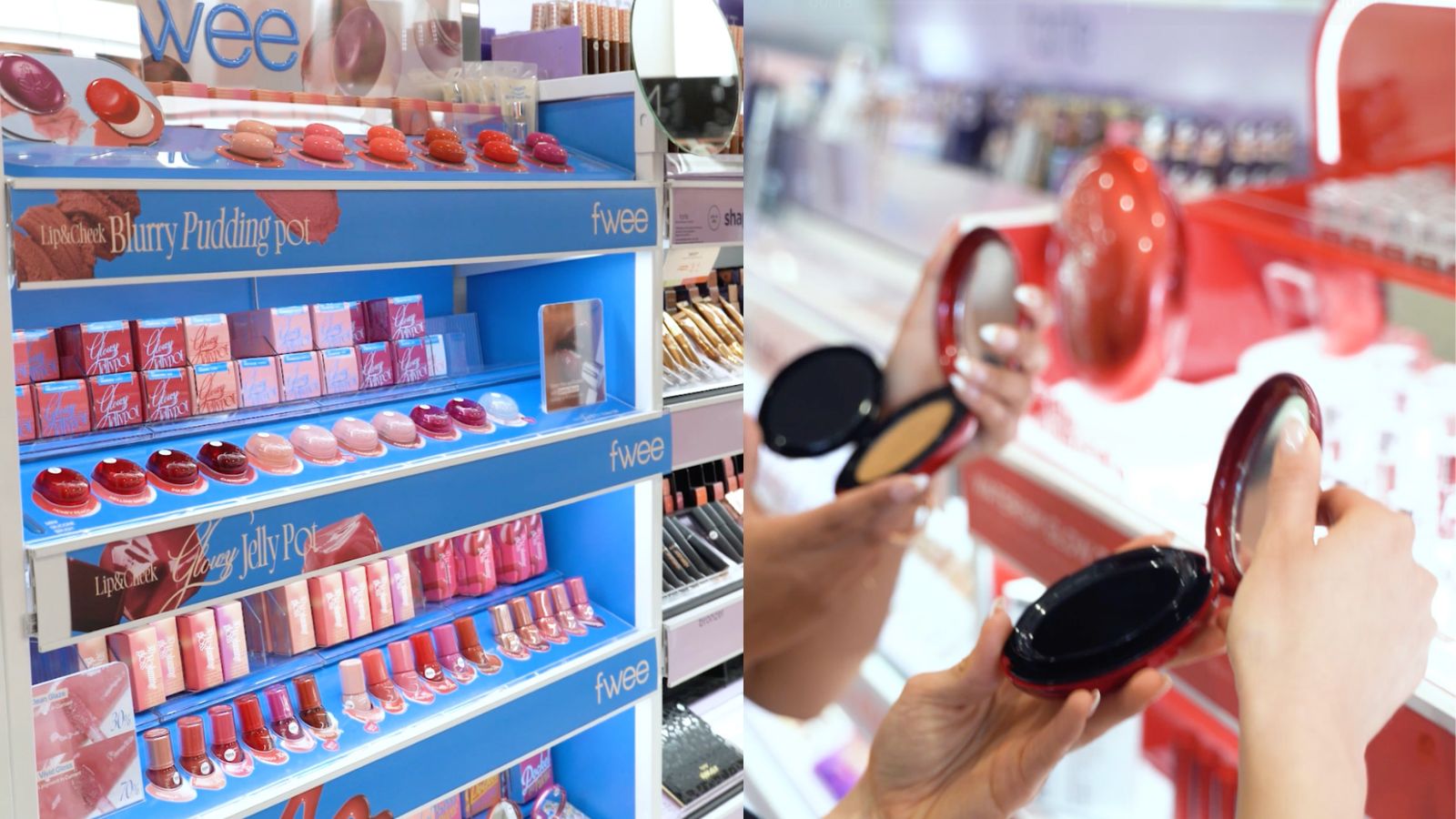
The most telling event in retail media this year isn't a new platform launching — it's a channel that never used to sell ads deciding to start. Costco, a membership warehouse model built on trust with 74.5 million members, has entered the retail media network business. Ulta Beauty runs its own version off loyalty data, betting that beauty-specific behavioral data beats generalist platforms like Amazon. When the shelf itself is an ad slot, not just the search results page, K-beauty brands need to rethink how U.S. budgets get allocated.
Every channel eventually becomes media
Criteo powers retail media for 225 retailers — Best Buy, Lowe's, Macy's, Safeway, Target, Ulta Beauty, Walmart Mexico — and now Costco and Sam's Club have joined. A warehouse-club model famous for its closed, trust-based member relationship opening up ad inventory is a signal that retail media is no longer the domain of Amazon and Walmart alone. It's becoming the standard revenue line across every retail format. Onsite video advertising launched in April 2025 with Costco, Albertsons, and Walmart Mexico as launch partners.
For K-beauty brands already on Costco's shelves, or working toward it, securing shelf space is no longer where the negotiation ends — it increasingly includes an onsite media budget as part of the deal. The performance gap between brands that build retail media into the listing agreement from day one, and brands that don't, will only widen from here.
Always-on beats the spike
In a Criteo case study on Ulta Beauty, a prestige fragrance brand ran a year-round campaign instead of concentrating spend around promotions, and held its share of voice through Mother's Day and Father's Day. The result: $1.8M in sales, 56% share of voice of total clicks, a 271% return on ad spend, and 16M impressions. Sponsored Product Listings remain the highest-volume format across retail media budgets.
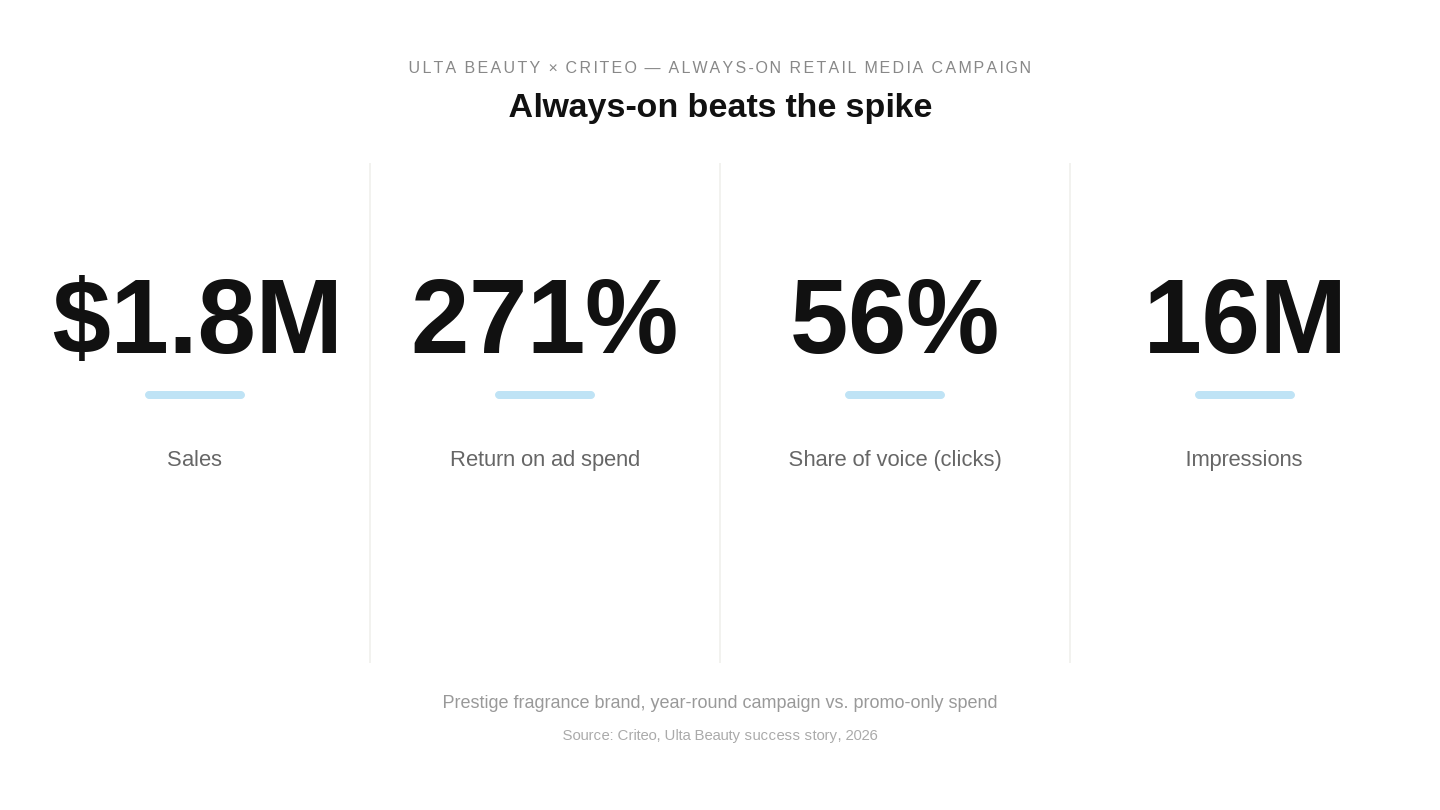
Concentrating spend only around a launch window, then switching it off, tends to hand back search ranking to competitors during exactly the periods that matter most. The fix is a minimum always-on budget across both online and in-store shelf presence — not a bigger spike, a longer one.
Category-specific data beats generalist data
Ulta's retail media arm differentiates on beauty-specific behavioral data — skin type, repurchase cycles, ingredient preferences — rather than generic purchase history, and claims higher targeting precision than platforms built for everything. Retail media campaigns overall average a 154% ROI.
Whatever category-specific data a retailer offers, lean into it. That structural efficiency advantage over generic programmatic advertising should factor directly into how budget gets split.
Treating retail media as a marketing line item, separate from the core deal, is over. As Costco's entry shows, it's now inseparable from listing agreements, shelf placement, and category strategy. For K-beauty brands building sustainable U.S. growth, where to list and how to run always-on media on that channel belong at the same table.
- 10 Trends Shaping the Retail Media Market — Criteo
- Ulta Beauty | Criteo Success Story — Criteo
- Retail Media Growth, Statistics, and Trends for 2026 — Fugo
- Top 15 Retail Media Networks 2026: Rankings & Benchmarks — Improvado
- What Are the Top Retail Media Networks In 2026? — Tinuiti
- Retail Media Networks 2026: Build, Buy & Benchmark Guide — Osmos